
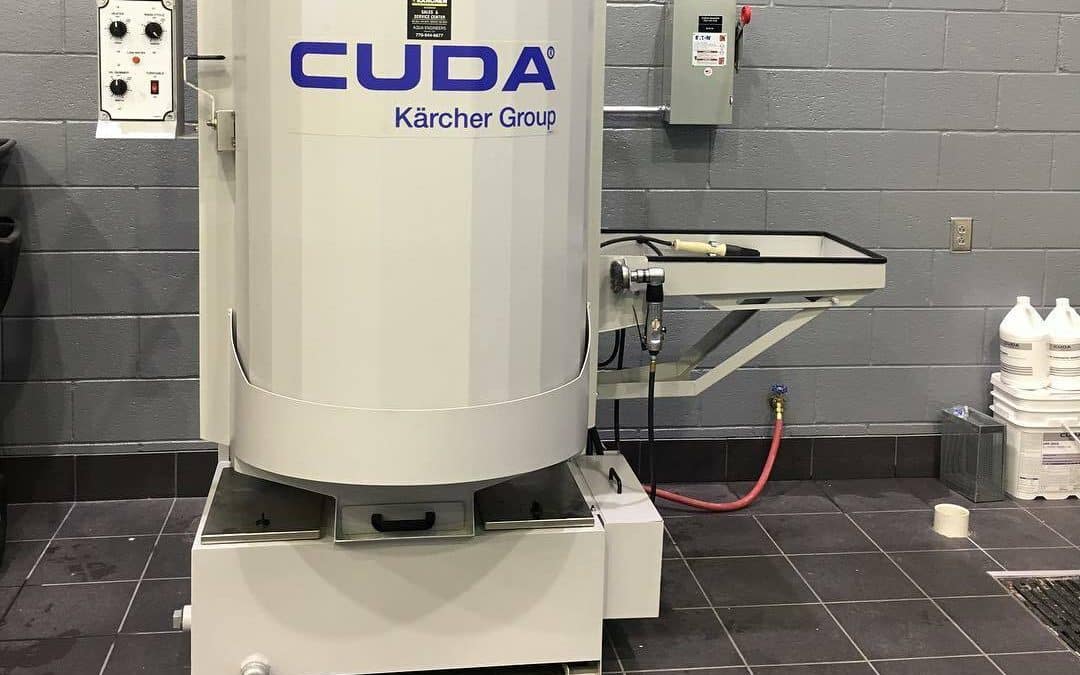
Choosing the right parts washer can improve cleaning efficiency, reduce maintenance costs, and keep your operation running smoothly. Two common options are aqueous and solvent parts washers, each offering different advantages depending on your cleaning needs.
Understanding the differences can help you select the best equipment for your automotive shop, manufacturing facility, or industrial operation.
What Is an Aqueous Parts Washer?
An aqueous parts washer uses water-based cleaning solutions, detergents, heat, and spray pressure to remove grease, oil, dirt, and other contaminants from mechanical components.
Many aqueous systems feature automatic cleaning cycles, allowing technicians to load parts and return to other tasks while the machine operates.
Benefits of Aqueous Parts Washers
- Reduced Chemical Exposure: Water-based solutions can reduce reliance on harsh petroleum solvents.
- Improved Productivity: Automatic cleaning reduces hands-on labor.
- Consistent Results: Heated solutions and spray pressure provide repeatable cleaning performance.
- Long-Term Savings: Reduced labor and solvent replacement costs can lower operating expenses.
Aqueous parts washers are commonly used in automotive repair, manufacturing, fleet maintenance, and heavy equipment service facilities.
What Is a Solvent Parts Washer?
A solvent parts washer uses chemical cleaning agents to dissolve grease, oil, and other contaminants. These systems are often used for manual parts cleaning and applications requiring specialized cleaning chemistry.
Solvent washers can be effective at removing stubborn petroleum-based residues and may be appropriate for components that cannot tolerate water exposure.
However, certain solvents introduce additional considerations, including ventilation, flammability, chemical handling, and waste disposal requirements.
Aqueous vs. Solvent Parts Washers: Key Differences
Both cleaning methods have advantages, but their performance and operating requirements differ.
| Feature | Aqueous Parts Washers | Solvent Parts Washers |
| Cleaning Method | Water-based detergents and heat | Chemical solvents |
| Grease Removal | Effective with proper chemistry | Effective on petroleum residues |
| Automation | Common in industrial systems | Available in some systems |
| Safety | Reduced solvent exposure | Depends on solvent used |
| Operating Costs | Potential labor and chemical savings | Ongoing solvent management |
| Environmental Impact | Reduced VOC emissions in many applications | May involve VOC emissions |
For businesses cleaning large quantities of mechanical parts, automatic aqueous systems can provide significant productivity advantages.
Which Parts Washer Is Better for Your Business?
The right choice depends on the types of parts you clean, the contaminants involved, and your daily cleaning volume.
Choose an aqueous parts washer if your business:
- Regularly cleans greasy automotive or industrial components.
- Wants to reduce manual cleaning labor.
- Needs consistent cleaning results.
- Prefers water-based cleaning solutions.
- Handles enough parts to benefit from automation.
Consider a solvent parts washer if your business:
- Cleans components requiring specialized solvents.
- Works with materials sensitive to water.
- Has occasional, low-volume cleaning needs.
- Requires a cleaning process suited to specific contaminants.
For many automotive and industrial maintenance operations, automatic aqueous parts washers offer an effective balance of cleaning performance, productivity, and long-term value.
Automatic Aqueous Parts Washers From Aqua Engineers
Aqua Engineers provides Cuda automatic parts washers designed for demanding automotive and industrial cleaning applications.
These systems use heated aqueous cleaning solutions and high-pressure spray action to remove grease, oil, and buildup while reducing the need for manual scrubbing.
With top-load and front-load configurations available, businesses can choose equipment based on component size, cleaning volume, and workspace requirements.
Explore Aqua Engineers’ selection of Cuda parts washers to find equipment suited to your operation.
Frequently Asked Questions
Are aqueous parts washers as effective as solvent washers?
Yes, aqueous parts washers can effectively remove grease, oil, and industrial contaminants when paired with appropriate cleaning solutions and operating temperatures. Performance depends on the application.
Are aqueous parts washers more environmentally friendly?
Aqueous systems can reduce VOC emissions and reliance on petroleum solvents. However, used cleaning solutions still require proper handling and disposal.
Do automatic parts washers save money?
Automatic parts washers can reduce labor requirements and improve cleaning efficiency. Actual savings depend on cleaning volume, equipment costs, and operating conditions.
Find the Right Parts Cleaning Solution
When comparing aqueous vs. solvent parts washers, consider more than cleaning performance alone. Labor requirements, chemical costs, safety, and maintenance all influence long-term value.
Aqua Engineers can help you evaluate your cleaning requirements and choose the right equipment for your facility.
Explore Our Parts Washers or contact Aqua Engineers to discuss your industrial cleaning needs.